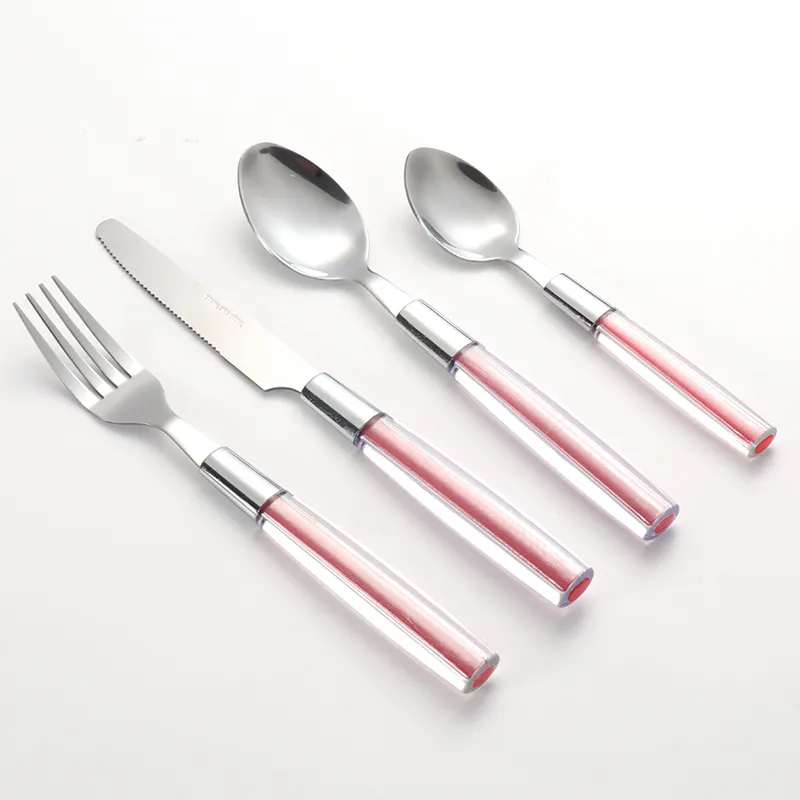
Ever been drawn to the shine of stainless steel cutlery in stores or online? Not all “shiny” cutlery is the same. The polishing process behind it determines not just the price, but also safety (e.g., whether it scratches your mouth). Today, we’ll break down the 3 most common polishing methods—perfect for restaurant owners, gift buyers, or anyone upgrading their home set!
Mechanical/Water Polishing: Budget-Friendly for High-Volume Use
Think free spoons at trade shows or $2 cutlery sets in discount stores—this is likely their process. It focuses on “quick basic polishing” with low cost and high efficiency, but don’t expect fine details.
How It Works: A “Friction Game” in the Barrel
Simply put, it’s like giving cutlery a “sandpaper bath”:
- Toss mixed forks, knives, and spoons into a large barrel.
- Add mild rust-removing polish (weakly acidic to avoid steel corrosion) and small iron beads (5-8mm diameter—hard enough to remove oxide but not scratch the base).
- Spin the barrel at high speed for 2-4 hours (too short = no effect).
- The beads rub against the cutlery, removing oxide layers and small flaws.
- After rinsing, you get “rust-free but not glossy” basic cutlery.
Who It’s For
- Product Type: Low-end cutlery, event gifts (trade show swag, restaurant opening gifts), high-volume purchases (canteens, fast-food joints)
- Users: Discount store buyers, trade show organizers, low-cost wholesalers
- Reorder Trait: Short cycles (1-2 weeks) since high-volume items sell fast
Watch Out for “Foggy Finishes”
Some factories cut corners—avoid:
- Shortened polishing time: Oxide layers remain, leaving a rough feel and rust risk
- Cheap chemicals: Poor-quality polish causes discoloration or strong odors
If the surface looks foggy or feels scratchy—don’t buy it
Hand Polishing (Hemp-Wheel): Mid-Range Staple—Check the Edges
Most 8-15 piece cutlery sets in supermarkets use this method. It’s more refined than mechanical polishing but less expensive than mirror polishing—great value, but be cautious of potential tricks.
How It Works: “Smoothness from Hemp Wheels”
The key tool is a “hemp wheel” (woven flax fiber, stiff enough for rough polishing). Workers hold cutlery against the spinning wheel, focusing on:
- Spoon edges: Sanded to be “non-sharp.”
- Knife blades: Sharp enough to cut bread/steak, but not too pointy
- Fork tines: Rounded tips to prevent pricks
The result has a soft shine (like a “simplified mirror”) but minor flaws or faint scratches (normal for this level)
Who It’s For
- Product Type: Mid-range cutlery (balances comfort and cost)
- Users: Supermarkets in developing countries, mid-tier e-tailers, small restaurants
- Reorder Trait: Medium cycles (1-2 months) focusing on “consistent quality.”
Avoid “Skipped Edge Polishing”
In some markets, ~60-70% of hemp-polished cutlery skips edge polishing (saves 10-20 mins/piece). Consequences:
- Rough edges or burrs
- Thin metal (<1.5mm) that bends easily and scratches mouths
Test: Run your finger along the spoon edges/fork tines. If it feels scratchy—steer clear
Mirror Polishing (Cloth-Wheel): High-End Standard—Check Details
$30+ premium cutlery (European/American brands, hotel sets) uses this. It’s the “top-tier” process—stylish, durable, but watch for fakes.
How It Works: “Mirror Shine from Cloth Wheels”
The tool is a “cloth wheel” (soft cotton/velvet) for fine polishing. The multi-step process:
- Rough polish with hemp wheels to smooth the surface
- Fine polish with medium cloth wheels to remove hemp marks
- Final polish with soft velvet wheels for a “mirror effect.”
Standards:
- Spoon edges: Completely smooth (like baby skin)
- Surface: No scratches, deformation, or sanding marks—high gloss that reflects clearly
Who It’s For
- Product Type: High-end cutlery (great for branding)
- Users: Markets in Europe/North America/Asia, luxury e-tailers, brands needing customization (titanium plating, laser logos, custom packaging)
- Reorder Trait: Long cycles (2-3 months) with strict quality demands
Don’t Mistake “Waxed Hand Polishing” for Mirror
Some factories cheat by waxing hemp-polished cutlery. How to tell:
- Check edges: Mirror-polished edges are “100% smooth”; waxed edges feel slightly rough
- Check reflection: Mirror polish has a uniform, clear reflection; waxed polish looks blurry and fades after use
If the price is too low for “mirror polish”—inspect carefully
Final: Quick Guide to Choose the Right Polishing
| Process | Key Features | Price Range (Per Set) | Ideal Scenarios | Pitfall Checks |
|---|---|---|---|---|
| Mechanical Polishing | Basic polish, foggy | $1-3 | Gifts, high-volume use | Foggy finish, scratchy feel |
| Hemp-Wheel Polishing | Soft shine, smooth edges | $3-8 | Mid-tier supermarkets, cafes | Scratchy edges, thin metal |
| Cloth-Wheel Polishing | Mirror shine, flawless | $10+ | Luxury brands, hotels | Rough edges, blurry reflection |
Polishing determines cutlery’s look, safety, and durability. Don’t just chase low prices—touch, inspect, and compare
About Huashun
Huashun is a trusted flatware and food storage containers manufacturer based in Jieyang, China, occupying a 1,000-square-meter facility. Specializing in wholesaling flatware, kids dinnerware, kitchen utensils, and food storage containers, Huashun offers over 200 designs and exports to 30+ countries.
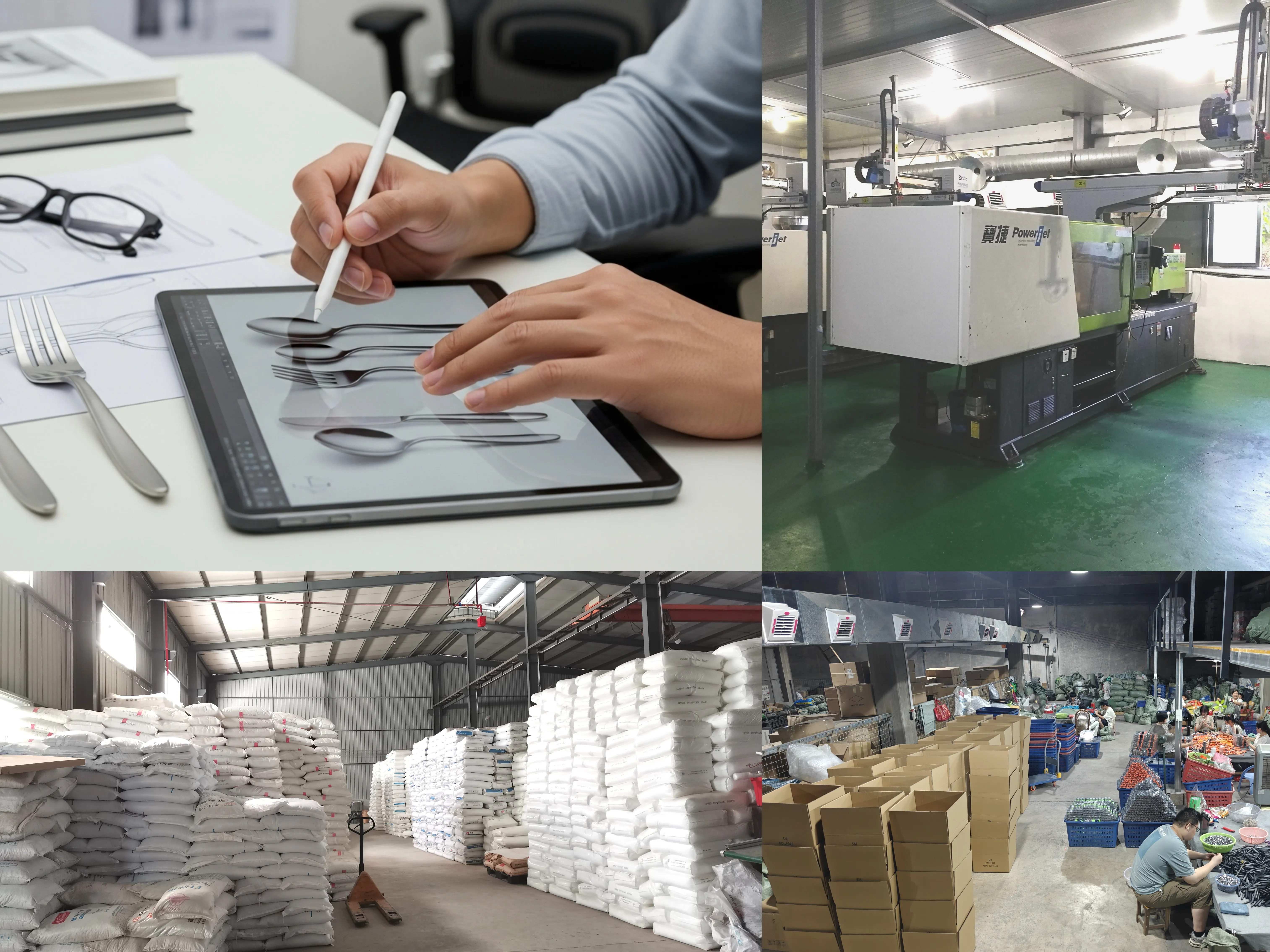
With over 20 years of experience, Huashun is dedicated to delivering high-quality products and fostering lasting relationships with clients, rather than focusing solely on one-time deals. The company focuses on timeless quality to create a lasting business.