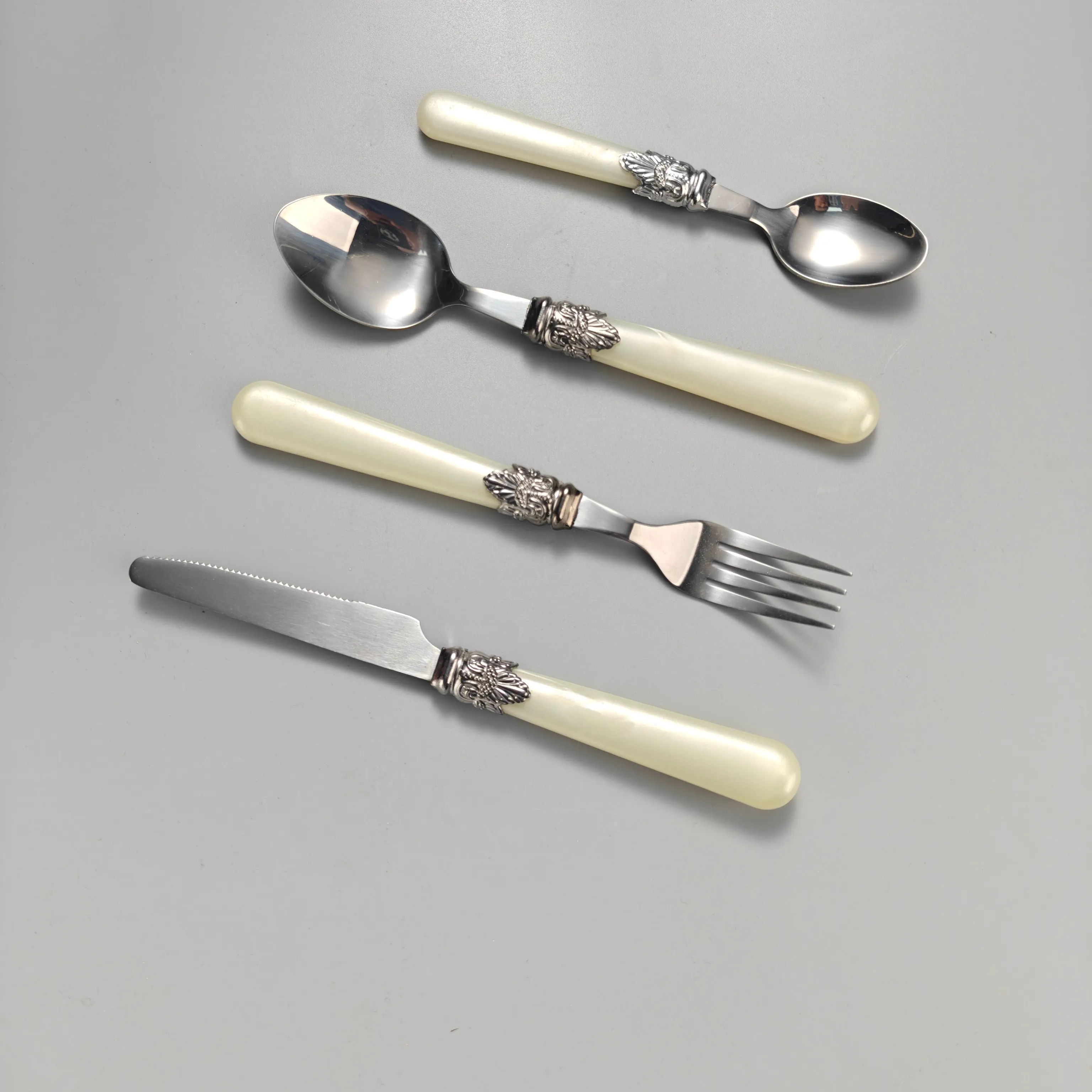
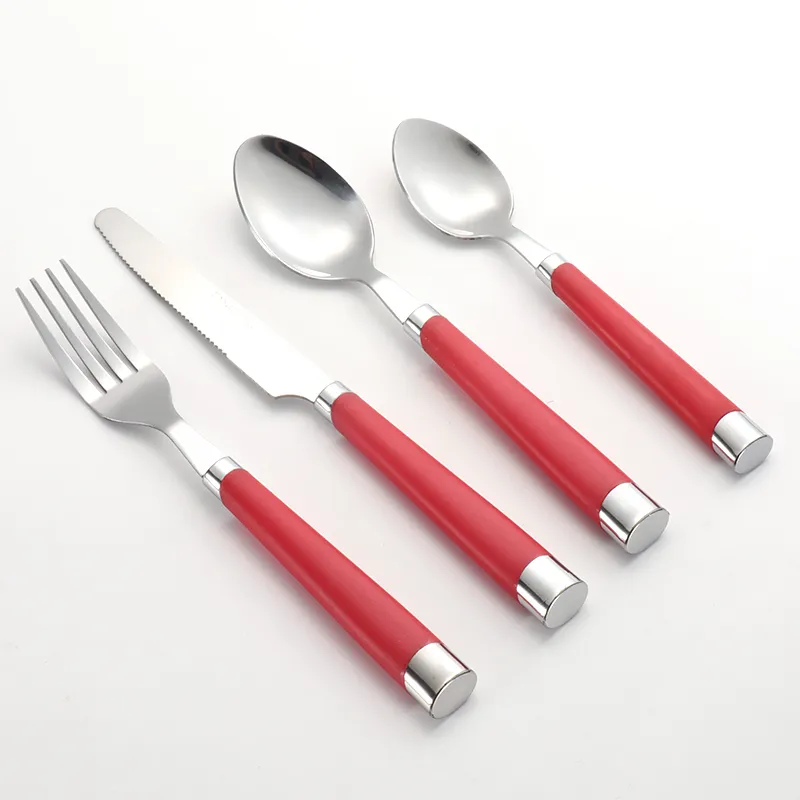
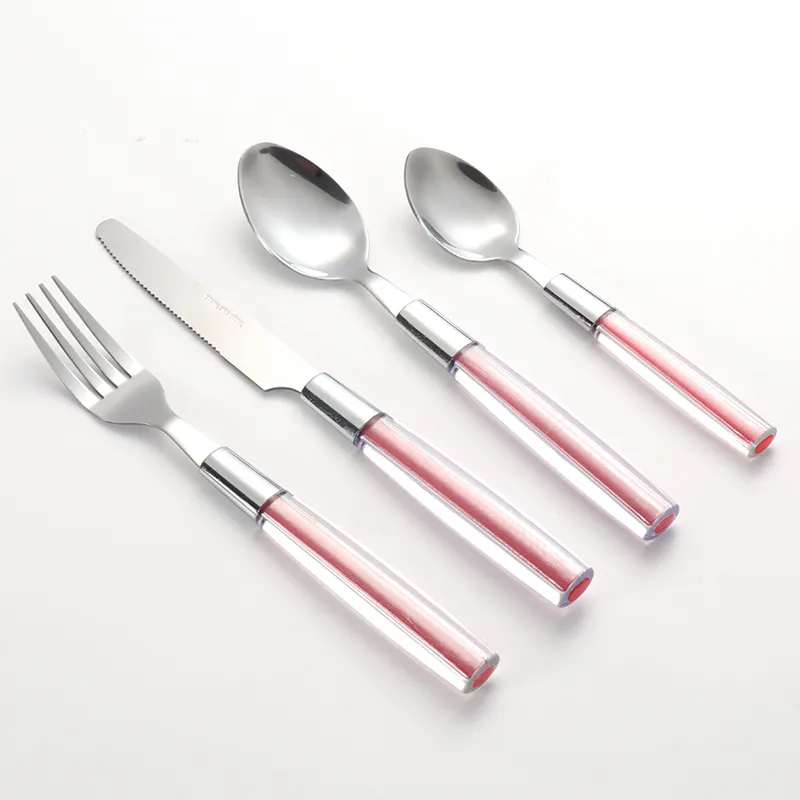
Commercial flatware is designed for the demanding conditions of restaurants, hotels, catering businesses, buffets, cafeterias, and other professional foodservice environments. Compared with residential flatware, it typically needs to withstand more frequent use, repeated washing, larger order quantities, and long-term daily service.
For restaurant owners, hotel purchasing teams, distributors, and other commercial buyers, understanding the differences between commercial and residential flatware can help determine the right product specification. This article explains what commercial flatware is, how it differs from residential flatware, and what factors matter when sourcing it for professional use.
What Is Commercial Flatware?
Commercial flatware refers to forks, knives, spoons, and related dining utensils designed for professional foodservice applications.
Unlike flatware primarily intended for household use, commercial products are used repeatedly by a large number of customers and are often washed, handled, stored, and redistributed many times every day.
Common applications include:
- Restaurants
- Hotels
- Catering businesses
- Buffets
- Banquet venues
- Cafeterias
- Foodservice distributors
- Institutional dining
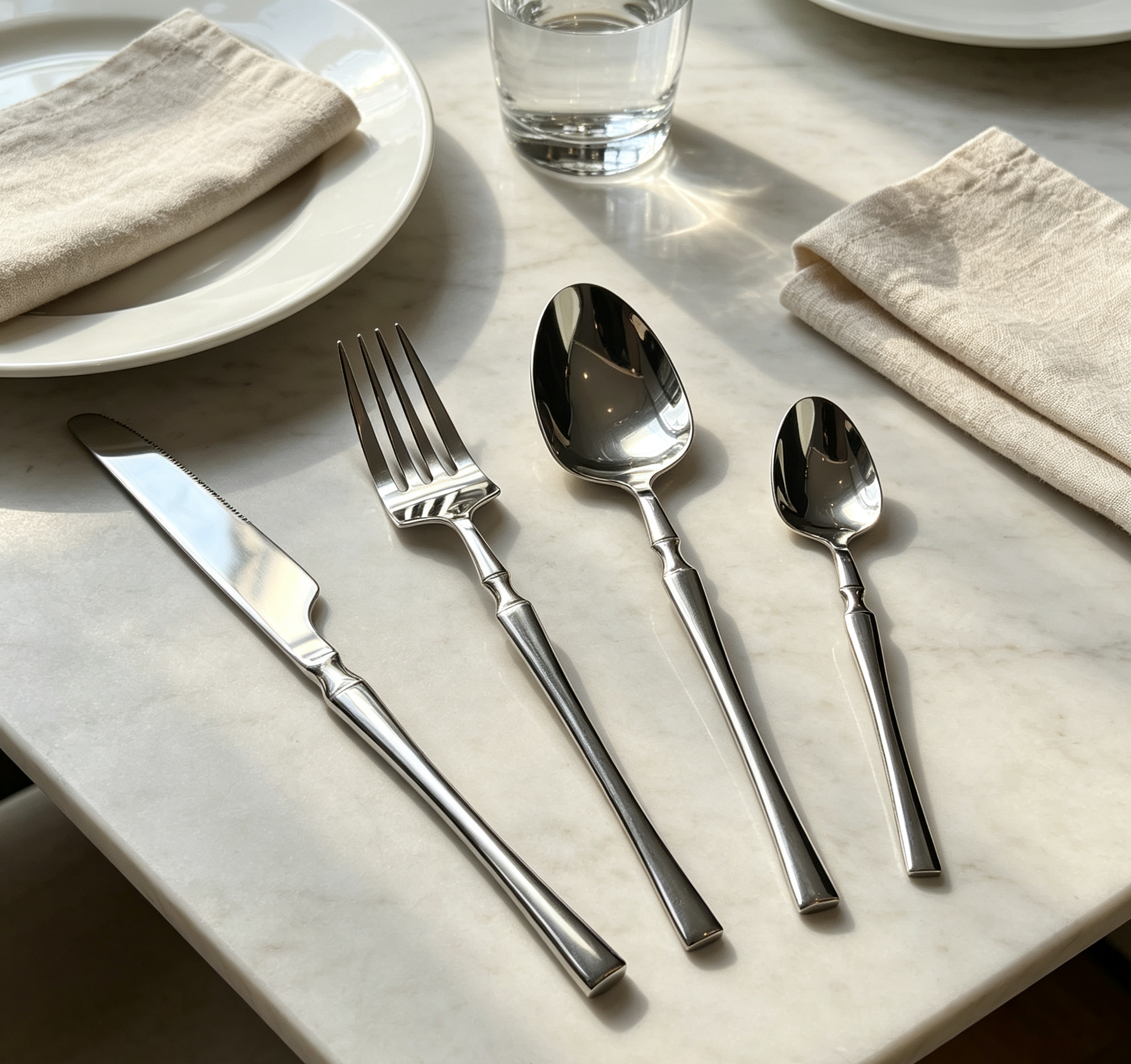
Depending on the application, commercial flatware can include dinner forks, salad forks, dinner knives, teaspoons, tablespoons, soup spoons, dessert pieces, and serving utensils.
The main objective is to provide a combination of durability, functionality, consistent appearance, and efficient replacement for high-volume operations.
Commercial Flatware vs. Residential Flatware: Key Differences
Although commercial and residential flatware can look similar, their intended applications are different.
| Factor | Commercial Flatware | Residential Flatware |
|---|---|---|
| Usage Frequency | High-frequency daily use | Moderate household use |
| Washing | Frequent cleaning and washing | Less frequent |
| Quantity | Often purchased in large quantities | Usually purchased in small sets |
| Durability | Designed for demanding service | Designed for general household use |
| Replacement | Replacement planning is important | Replacement is less frequent |
| Consistency | Important across large quantities | Less critical |
| Application | Restaurants, hotels, catering, and other foodservice | Homes and personal dining |
| Purchasing | Bulk or wholesale orders are common | Retail purchases are common |
The difference is therefore not simply about appearance. Commercial flatware is selected with the operating environment and expected usage level in mind.
Why Do Restaurants Need Commercial Flatware?
Restaurants can use the same basic types of forks, knives, and spoons found in residential settings, but the demands placed on those products are very different.
A busy restaurant may use the same pieces multiple times throughout a single day. After each service, the flatware needs to be collected, cleaned, inspected, stored, and returned to service.
This makes several characteristics especially important.
High-Frequency Use
Commercial dining utensils need to perform consistently through repeated service. Forks, knives, and spoons are handled by staff and customers throughout the day, so durability becomes an important purchasing consideration.
Repeated Washing
Restaurant flatware is commonly washed much more frequently than household flatware. The material and surface finish should therefore be suitable for the restaurant’s cleaning process and operating conditions.
Consistent Appearance
A professional table setting requires consistency. Large quantities of flatware should have a uniform appearance, finish, dimensions, and overall quality.
Easy Replacement
Restaurants need to maintain sufficient inventory for daily service. Having replacement pieces available helps avoid situations where a small number of missing or damaged utensils disrupt table settings.
Commercial Flatware for Hotels
Hotels can have more complex flatware requirements than individual restaurants because they may operate several foodservice areas at the same time.
A hotel may need hotel flatware for:
- Breakfast restaurants
- All-day dining
- Fine dining
- Room service
- Banquets
- Buffets
- Conferences and events

Each environment can require a different combination of flatware pieces.
For example, breakfast service may require larger quantities of teaspoons, tablespoons, forks, and knives, while fine dining may require additional specialized pieces for different courses.
For large hotel projects, consistency across different dining areas is particularly important. Purchasing teams may need to consider not only the initial order but also future replenishment requirements.
Commercial Flatware for Buffets
Buffet operations place unique demands on dining utensils because large numbers of guests may use the same types of pieces during a relatively short service period.
Buffet flatware should therefore provide:
- Reliable durability
- Comfortable handling
- Easy cleaning
- Consistent appearance
- Efficient replenishment
Buffet operators may also need larger quantities of specific pieces depending on the menu.
For example, a breakfast buffet may require substantial quantities of forks, knives, teaspoons, and tablespoons, while a dinner buffet may need soup spoons, dinner forks, and additional serving utensils.
When sourcing buffet cutlery in bulk, buyers should consider both daily usage and replacement inventory.
Commercial Flatware for Catering and Banquets
Catering companies and banquet venues often handle large numbers of guests at temporary or high-volume events.
In these situations, flatware must be practical to transport, organize, clean, and replenish.
Important considerations include:
- Quantity
- Durability
- Weight
- Storage efficiency
- Packaging
- Finish consistency
- Replacement availability
For large events, purchasing bulk flatware can make inventory management more efficient and help maintain consistent table settings across the venue.
What Makes Commercial Flatware Suitable for High-Volume Use?
The suitability of commercial flatware depends on several product and manufacturing factors rather than a single specification.
Stainless Steel Material
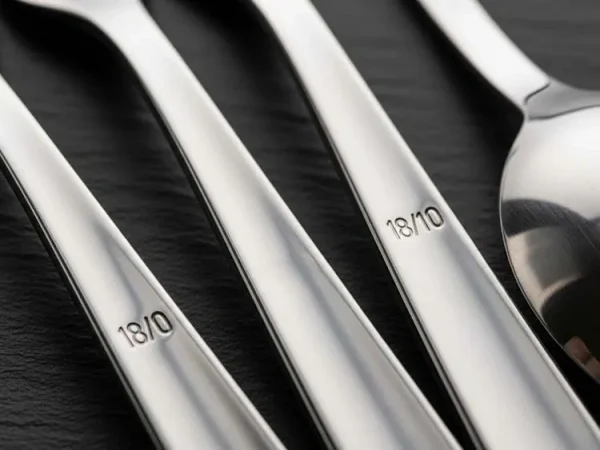
Stainless steel is widely used for commercial dining utensils because it offers a combination of durability, corrosion resistance, and a professional appearance.
Different grades provide different characteristics. Buyers should select the appropriate stainless steel specification according to the intended application, performance requirements, and budget.
Thickness and Weight
Thickness and weight influence the overall feel and durability of flatware.
Very lightweight pieces may be suitable for certain applications, while restaurants and hotels may prefer a more substantial feel.
However, heavier does not automatically mean better. The ideal specification should balance durability, comfort, and the requirements of the dining environment.
Surface Finish
The surface finish affects the visual appearance of commercial flatware.
Depending on the restaurant, hotel, or catering concept, buyers may select polished, mirror, matte, or other finishes.
The finish should be consistent across the order and appropriate for the overall tableware design.

Manufacturing Consistency
For large commercial orders, consistency is critical.
Buyers should pay attention to:
- Dimensions
- Weight
- Thickness
- Surface finish
- Handle shape
- Edge quality
- Overall appearance
Consistent manufacturing helps restaurants and hotels maintain a uniform table setting across large quantities.
When Should You Choose Commercial Flatware?
Commercial flatware is generally a suitable option when dining utensils will be exposed to frequent use and professional foodservice conditions.
It can be appropriate for:
Restaurants
High daily customer turnover makes durability and easy replenishment important.
Hotels
Multiple restaurants, buffets, banquets, and room-service operations can require large and varied flatware inventories.
Catering Businesses
Large events require efficient inventory management and sufficient replacement stock.
Buffets
High guest turnover and repeated handling make practical and durable dining utensils particularly important.
Cafeterias and Institutional Dining
Large numbers of users and frequent cleaning can create higher demands than typical household use.
In these situations, buying flatware specifically intended for commercial applications can provide a more suitable long-term solution.
Commercial Flatware and Bulk Purchasing
Commercial buyers often purchase significantly larger quantities than residential customers.
When ordering bulk flatware, the purchasing process should consider more than the initial unit price.
Calculate Actual Demand
Estimate the number of dining seats, daily service volume, and expected usage of each flatware piece.
Keep Replacement Stock
A small amount of additional inventory can help replace missing or damaged pieces without changing the table setting.
Check Sample Quality
Before placing a large order, buyers should evaluate samples for:
- Weight
- Balance
- Surface finish
- Handle comfort
- Edge quality
- Overall consistency
Confirm Production Consistency
For hotels, restaurant groups, distributors, and importers, future replenishment is important. The supplier should be able to maintain consistent specifications across repeat orders.
Consider Packaging
Suitable packaging can protect flatware during transportation and storage while making large-volume inventory easier to manage.
Commercial Flatware vs. Residential Flatware: Which Should You Choose?
The right choice depends on the intended application.
For occasional household dining, residential flatware may provide everything a family needs.
For businesses that serve large numbers of customers every day, commercial flatware is generally more appropriate because purchasing decisions need to account for repeated use, frequent washing, consistent appearance, and long-term replenishment.
The key is to match the flatware specification to the operating environment rather than choosing solely based on appearance or unit price.
How to Source Commercial Flatware for Your Business
For restaurants, hotels, caterers, distributors, and importers, sourcing commercial flatware requires attention to both product quality and manufacturing capability.
Before placing a large order, consider:
- What type of foodservice environment will use the flatware?
- How frequently will the pieces be used and washed?
- Which stainless steel specification is appropriate?
- What weight and thickness are required?
- Which finish matches the tableware and brand image?
- How many pieces are needed for initial service?
- How much replacement inventory should be maintained?
- Can the supplier maintain consistent quality across large orders?
- Can future replenishment match the original specification?
A reliable manufacturing partner should be able to provide consistent production and support commercial buyers with the specifications required for their target market.
Conclusion
Commercial flatware is designed around the practical requirements of professional foodservice rather than occasional household dining. Frequent use, repeated washing, large quantities, consistent appearance, and replacement requirements all influence the right specification.
Restaurants, hotels, buffets, catering businesses, and other commercial operations should evaluate material, thickness, weight, finish, consistency, and purchasing requirements before placing an order.
For businesses sourcing bulk flatware or wholesale flatware, choosing a manufacturer with stable production capabilities can help maintain consistent quality across initial and repeat orders.
About Huashun
Huashun is a professional stainless steel flatware manufacturer serving restaurants, hotels, catering businesses, distributors, and other commercial buyers. With experience in stainless steel flatware production and a range of specifications and finishes, Huashun supports businesses looking for reliable solutions for commercial and wholesale applications.